
Loading...
Serving Seaside, CA and surrounding areas. (831) 315-4007
Seaside Insulation serves Prunedale with crawl space insulation, vapor barriers, attic blown-in, and spray foam tailored to the area's 1980s and 1990s housing stock, wet winter clay soils, and large rural lots. We have served Monterey County since 2016 and respond to every inquiry within one business day.
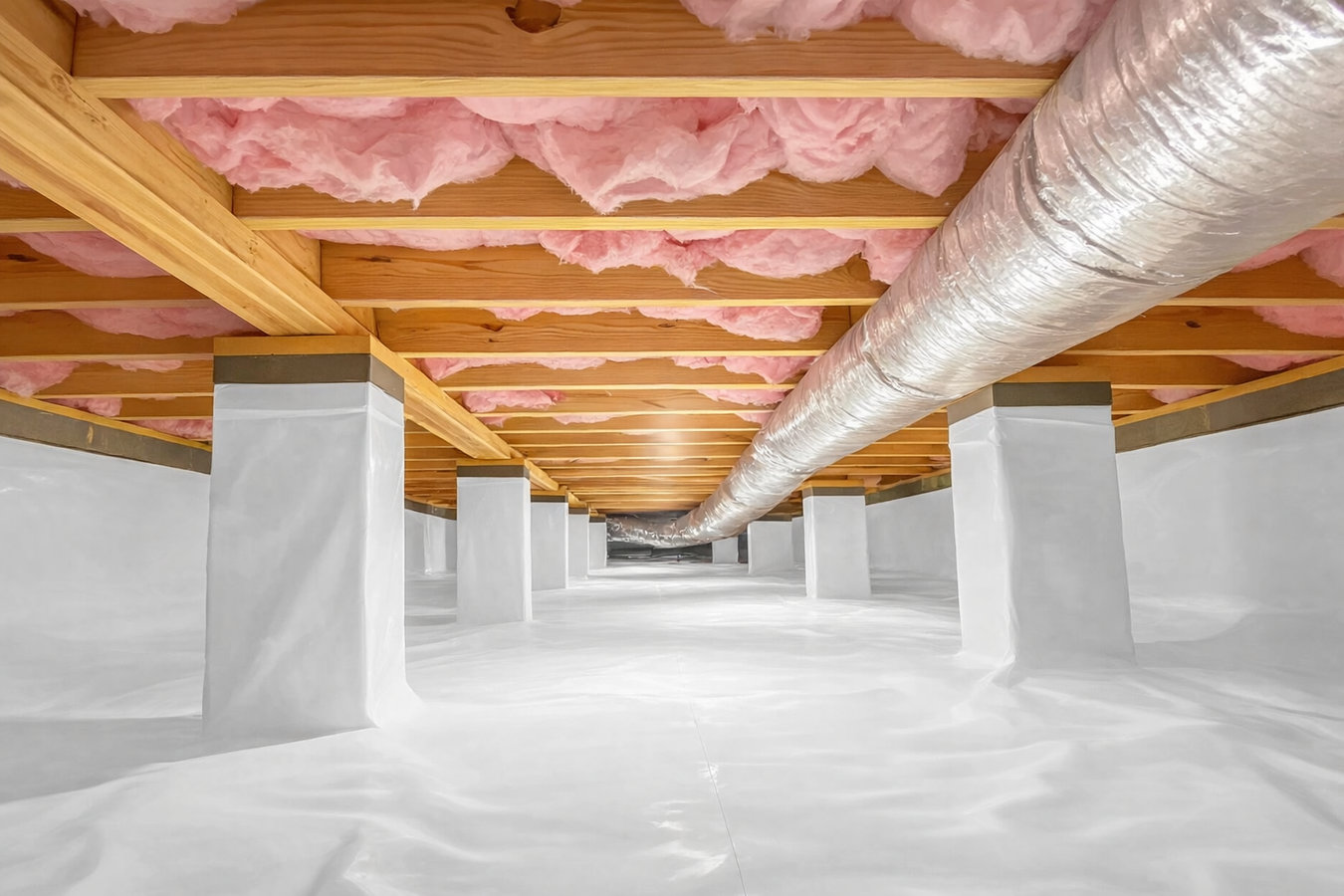
Prunedale's wet winters and clay-heavy soils create crawl space conditions that degrade insulation steadily over time - batts fall from floor joists, absorb moisture, and stop doing their job. Many homes built here in the 1980s have crawl space insulation that is now 30 to 40 years old and has never been replaced. Our crawl space insulation services address both the insulation itself and the moisture conditions underneath that cause the problem to repeat.
Monterey County's clay soils hold rainwater and release it slowly as vapor, and Prunedale homes sitting on hillside lots or in low-lying areas near the rolling terrain are especially exposed to that ground moisture cycle. A properly installed polyethylene vapor barrier across the crawl space floor cuts off the primary moisture source before it can reach wood framing, insulation, or floor systems. For homes that already show signs of mold or wood rot in the crawl space, a vapor barrier is the first step before any insulation work begins.
Most Prunedale homes built in the 1980s were insulated to standards that California's current energy code has since raised significantly. Attic insulation that was installed at R-19 or R-22 thirty years ago is now compressed, potentially moisture-damaged, and performing below even its original rating. Upgrading to current R-value recommendations - typically R-38 or higher for Monterey County's climate zone - is the single improvement that most reliably reduces heating bills and improves winter comfort in homes of this age and type.
Blown-in insulation is the most efficient way to upgrade the attic in an occupied Prunedale home, because it adds material on top of what is already there without any demolition or interior disruption. It fills irregular spaces and around existing framing, obstructions, and ductwork better than batts can manage. For wall cavities in finished 1980s homes, dense-pack blown-in can be installed through small drilled holes in the exterior or interior, treated, and patched without opening walls.
Prunedale sits in a part of Monterey County where winter wind can be strong off the rolling terrain, and older homes with gaps around plumbing penetrations, top plates, and recessed lighting let that air directly into the building envelope. Air sealing those specific points before adding attic insulation is what makes the insulation perform as intended. Without sealing, conditioned air escapes around the insulation rather than through it, and the expected improvement in comfort does not materialize.
For Prunedale properties with detached garages, workshops, or outbuildings - common on the half-acre and larger lots here - spray foam is the most durable insulation choice for unfinished spaces that need both thermal and moisture control. In the main house, closed-cell spray foam applied to crawl space walls and rim joists handles the combined air and moisture infiltration that blown-in or batt materials cannot fully address in the damp conditions that Prunedale's clay soils create year-round.
Prunedale is an unincorporated community in northern Monterey County along US Highway 101, and most of its housing was built during a rapid growth period from the late 1970s through the 1990s as families moved out of Salinas looking for larger lots at lower prices. That means the bulk of the housing stock here is between 30 and 45 years old - precisely the age range where original roofing systems need replacement, attic insulation has compressed significantly below its installed R-value, and crawl space vapor barriers have deteriorated or were never adequate to begin with. California's energy code has been updated multiple times since these homes were built, and many Prunedale homes fall well short of what Title 24 now requires for permitted renovation or equipment replacement work.
The climate here adds its own pressure. Prunedale gets most of its annual rainfall between November and March, and the clay-heavy soils throughout northern Monterey County absorb that rainfall and hold it - releasing moisture slowly into crawl spaces long after storms have passed. Properties on hillside lots east of Highway 101 deal with additional runoff from slope drainage that pushes toward foundations. Mild winters mean freeze-thaw cycles are not severe, but the persistent damp from November through April is hard on wood framing, concrete flatwork, and any insulation that is not properly protected from ground moisture. Summer brings dry, warm conditions with temperatures in the mid-80s and low 90s, which is real heat for a community that sits close enough to the coast to feel a coastal influence but far enough inland to skip the cooling fog that keeps nearby Monterey and Pacific Grove comfortable.
Our crew works throughout Prunedale regularly, and we understand the local conditions that affect insulation work here. Prunedale is unincorporated, so building permits for work that requires them are handled by Monterey County rather than a city building department - a distinction that matters when it comes to permit applications and inspection scheduling, and one we are familiar with. The community's housing is spread across a mix of flat lots near Moro Road and Highway 101 and larger hillside properties east of the freeway, and we work on both.
Most of the homes we work on in Prunedale are single-family detached houses with attached or detached garages, standard raised or slab foundations, and attic spaces that have not been touched since the original build. Many homeowners here are long-term residents who know their home well and have a clear sense of which rooms run cold in winter or which utility bills seem high for a home of this size. That kind of specific knowledge is useful - it helps us know where to look first and what the inspection is likely to find.
We also serve nearby Castroville and Salinas, so our team knows the full range of northern Monterey County conditions and housing types.
Call us or submit a request through our contact form and we will get back to you within one business day. We will ask about your home, the specific areas you want looked at, and any comfort or moisture issues you have noticed.
We drive out to your Prunedale property, inspect the attic, crawl space, and any other relevant areas, and give you a written estimate on the spot. The assessment costs nothing and there is no obligation to move forward.
Our crew arrives on the scheduled date and completes the installation in a single visit when possible. We remove any degraded original material, install the new insulation, and work without disrupting your household more than necessary.
Before we leave, we walk you through the completed work so you can see exactly what was installed and where. All removed material and job debris is hauled off your property the same day we finish.
We serve Prunedale and the surrounding northern Monterey County area with free on-site estimates and honest, straightforward pricing. Reach out by phone or online and we will respond within one business day.
(831) 315-4007Prunedale is an unincorporated community in northern Monterey County, California, straddling US Highway 101 between Salinas to the south and the Santa Cruz County line to the north. Named for the prune orchards that once covered the rolling hills here, the community has grown into a primarily residential area of roughly 17,000 to 18,000 people spread across single-family homes, horse properties, and rural lots. Residents have voted more than once to remain unincorporated rather than incorporate as a city, which means Monterey County provides local services and handles permits. The Moro Road corridor near the freeway is the closest thing the community has to a main commercial strip, and many residents commute daily to Salinas, Monterey, or further north on 101.
The housing stock is almost entirely single-family detached homes, most built between the late 1970s and early 2000s on lots that range from standard suburban sizes to half-acre and larger rural parcels. Owner occupancy rates are high, and many residents have lived in their homes for 10 to 20 years, putting them at the point where deferred maintenance projects - roofs, insulation, crawl space moisture control - are ready to be addressed. Neighboring communities include Salinas to the south and Marina to the southwest along the coast, both of which we serve regularly as part of our Monterey County coverage.
Create an airtight thermal barrier that lowers energy bills and improves comfort.
Learn MoreKeep your home comfortable year-round by insulating the most critical area.
Learn MoreProtect floors and pipes from cold and moisture with proper crawl space coverage.
Learn MoreImprove interior comfort and soundproofing by insulating exterior and interior walls.
Learn MoreEliminate drafts and air leaks to maximize your insulation performance.
Learn MoreInsulate basement walls and rim joists to prevent heat loss below grade.
Learn MoreHigh-density foam that adds structural strength and superior moisture resistance.
Learn MoreLightweight foam insulation ideal for interior walls and sound dampening.
Learn MoreEnergy-efficient insulation solutions scaled for commercial and industrial buildings.
Learn MoreBlock ground moisture from entering your crawl space with a durable barrier.
Learn MorePrevent moisture damage throughout your home with professional barrier installation.
Learn MoreSeal attic bypasses to stop conditioned air from escaping through the top.
Learn MoreAdd insulation to existing walls and spaces without major renovation work.
Learn MoreIf your Prunedale home is overdue for an attic upgrade, crawl space moisture control, or a full insulation assessment, we are ready to help. Call or request a free estimate and we will be in touch within one business day.