
Loading...
Serving Seaside, CA and surrounding areas. (831) 315-4007
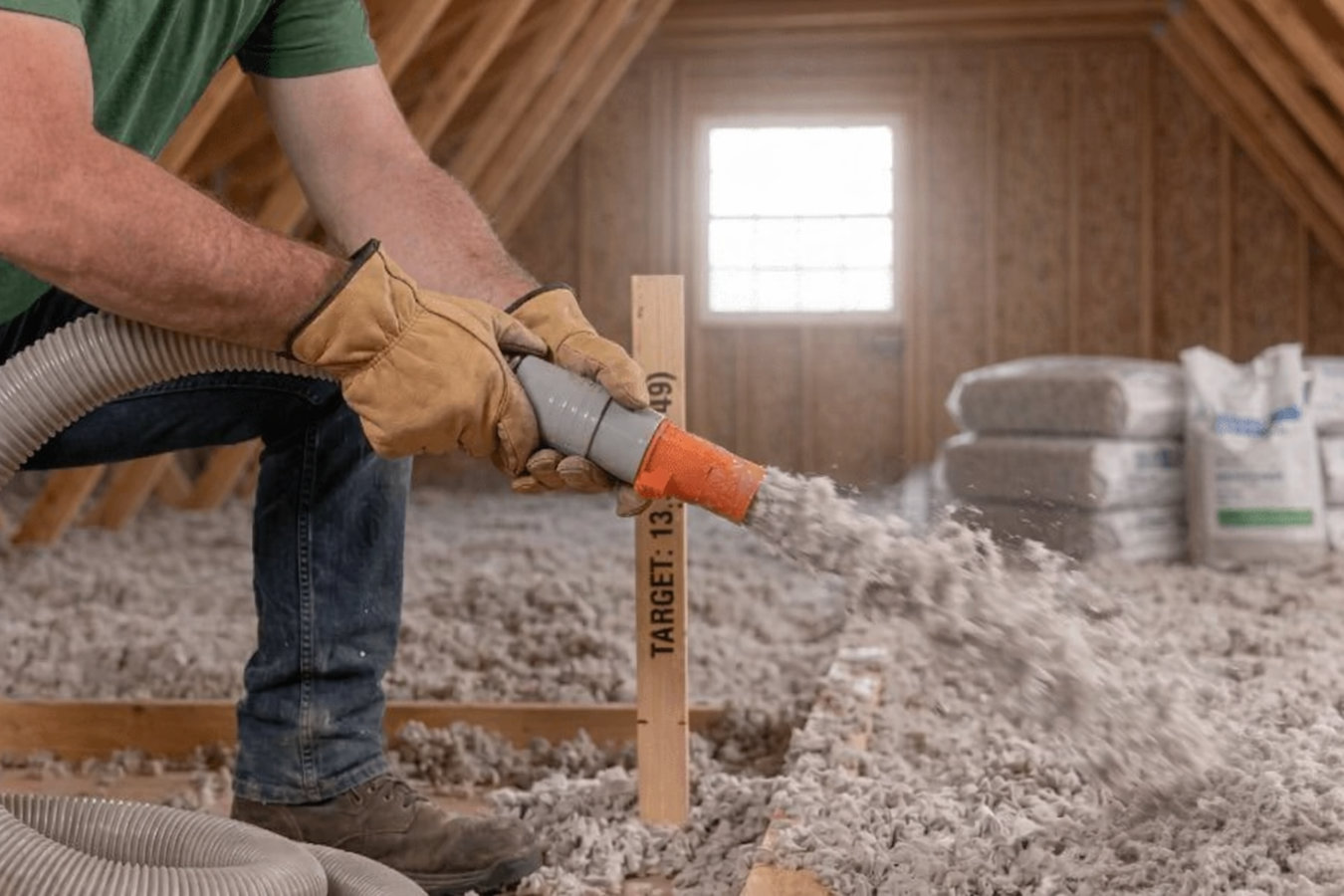
Seaside Insulation serves Castroville with blown-in insulation, crawl space vapor barriers, spray foam, and attic air sealing built for the coastal fog, salt air, and mid-century homes of this community. We have served Monterey County since 2016 and respond to every inquiry within one business day.
Most homes in Castroville were built between the 1940s and 1970s with batt insulation that has been compressing and settling for decades, leaving thin spots and gaps that let heat escape in winter and enter in summer. Blown-in insulation - cellulose or fiberglass - fills attic cavities completely, covering existing batts and reaching low-clearance areas where new batts cannot be placed without gaps. Our blown-in insulation services are a practical upgrade for occupied homes where attic access is limited and full renovation is not on the table.
Castroville's flat terrain and proximity to irrigated farmland mean ground moisture is a year-round reality under many homes, not just a winter problem. Older homes here often have open or deteriorated crawl space vapor barriers - sometimes just thin plastic sheeting laid decades ago - that do nothing to stop ground moisture from rising into the wood framing and floor joists above. A properly sealed, heavy-duty liner cuts off that moisture path and protects the structure and any insulation installed above it.
Castroville winters are mild but damp, and the marine fog that rolls in from Monterey Bay in the mornings keeps attic ventilation openings moist for hours at a time. Homes with unsealed top-plate gaps, recessed light penetrations, and plumbing chases allow conditioned air to escape and damp exterior air to enter, both reducing comfort and raising energy costs. Sealing those penetrations before adding blown-in insulation is the step that makes the insulation perform as expected rather than just looking adequate on paper.
Cold floors in winter are a common complaint in Castroville's older single-family homes, and the usual cause is inadequate or missing insulation between the floor joists in the crawl space below. The coastal air that keeps summer temperatures mild also keeps crawl spaces cooler and damper than they would be further inland, which makes proper insulation of that zone important for both comfort and moisture control. Insulating the floor joists or the crawl space walls - depending on whether the space is vented or sealed - addresses cold floors and reduces the load on heating systems.
For areas where air and moisture move together - crawl space walls, rim joists, and band joists in Castroville's older raised-foundation homes - spray foam provides both insulation and an air-and-moisture barrier in a single application. Closed-cell foam does not absorb water, which matters in a community where coastal humidity and farmland irrigation keep the ground and ambient air consistently damp. It is particularly useful for filling irregular gaps and transitions in mid-century framing that other insulation types cannot fully seal.
Homes built in Castroville in the 1950s and 1960s sometimes still have their original insulation - fiberglass batts that have compressed to a fraction of their original R-value, or in older structures, materials that need safe removal before new insulation can be installed. Moisture damage from years of coastal fog exposure can also make existing attic or crawl space insulation a breeding ground for mold. Removing the old material before re-insulating gives new insulation a clean surface to work from and eliminates hidden moisture and pest problems at the same time.
Castroville sits just a few miles inland from Monterey Bay, close enough that marine fog rolls through most mornings and salt air reaches every surface on the outside of your home. That coastal exposure makes Castroville different from inland Salinas Valley towns, and it matters for insulation. Moisture from fog and salt air moves into attics through ventilation gaps, degrades batt insulation faster than in dry climates, and accelerates wood rot in crawl spaces that were never properly sealed. A large share of Castroville's homes were built between the 1940s and 1970s, and most have never had their original insulation replaced. That means decades of compression, moisture damage, and gradual R-value loss happening quietly in the attic and under the floor.
The flat terrain around Castroville creates drainage challenges that are less common in hillier communities. Water from winter rain - and from the irrigation systems that keep the surrounding artichoke fields productive - does not drain quickly away from foundations. Standing water near crawl space vents and deteriorated vapor barriers means ground moisture works its way up into the structure year-round. Monterey County follows California's Title 24 energy efficiency standards, and older homes that have not been updated are often far below current requirements for attic insulation, wall insulation, and air sealing.
Our crew works throughout Castroville regularly, and we understand the local conditions that affect insulation work here. The homes we most often service in Castroville are wood-frame, stucco-exterior single-family houses from the 1950s and 1960s - buildings with low attic clearances, original crawl spaces, and framing dimensions that are slightly different from today's standard lumber sizes. Getting to those attic and crawl space zones in older homes requires patience and the right equipment, and our crews come prepared for tight access rather than assuming a straightforward job.
Castroville is easy to reach from our base in Seaside - Highway 1 runs right through town, connecting us directly along the coast. The community is centered around Merritt Street and the surrounding residential blocks, with properties sitting close to active farmland on the outskirts. Because Castroville is an unincorporated community, permits for home improvement work go through Monterey County Resource Management Agency rather than a city building department, and we are familiar with that process for projects that require one.
We also serve nearby Marina, CA just to the south along Highway 1, where the housing stock and coastal conditions are similar. For homeowners in Castroville who want to compare options or understand how their situation fits in context, it helps to know that we handle both communities regularly and apply the same attention to local detail in each.
Reach us by phone at (831) 315-4007 or through the contact form on this site. We respond to every inquiry from Castroville within one business day - usually the same day - to schedule your free on-site assessment.
A technician visits your Castroville property, inspects the attic, crawl space, and any other areas of concern, and measures the current insulation levels. You receive a firm, itemized written quote before you decide anything - no pressure and no estimates that change at the job site.
Our crew arrives at the agreed time and completes the work in the access areas discussed - attic, crawl space, or both. For most standard Castroville homes, blown-in attic insulation is completed in a single day, while crawl space work is scheduled as a separate day if both are needed.
Before we leave, we walk you through what was done, show you the completed work where accessible, and leave the property clean. Any removed insulation or debris is bagged and taken with us - we do not leave material on your property.
We serve Castroville and the surrounding Monterey County communities. Free on-site assessment, no-obligation written quote.
(831) 315-4007Castroville is a small unincorporated community in Monterey County, best known as the self-proclaimed Artichoke Capital of the World. Sitting just off Highway 1 near the junction with Highway 156, it is about five miles north of Seaside and Monterey. The community is home to roughly 6,600 to 7,000 residents and has a strong agricultural identity - artichoke fields, row crops, and packing operations surround the residential streets on multiple sides. Most of the housing stock dates from the mid-20th century, with single-family wood-frame homes on modest lots making up the majority of the residential areas. The community's Wikipedia page gives a useful overview of its history and character for anyone less familiar with the area.
The residential neighborhoods closest to Merritt Street and the town center tend to have the oldest homes, while newer construction sits further from the core. Properties near the edges of the community back up to farmland in some cases, which affects drainage and soil conditions. Homeowners in Castroville often find that their neighbors in nearby Prunedale and Salinas face similar insulation challenges - older housing stock, coastal moisture, and original insulation that has never been replaced - and we serve all three areas with the same local approach.
Create an airtight thermal barrier that lowers energy bills and improves comfort.
Learn MoreKeep your home comfortable year-round by insulating the most critical area.
Learn MoreProtect floors and pipes from cold and moisture with proper crawl space coverage.
Learn MoreImprove interior comfort and soundproofing by insulating exterior and interior walls.
Learn MoreEliminate drafts and air leaks to maximize your insulation performance.
Learn MoreInsulate basement walls and rim joists to prevent heat loss below grade.
Learn MoreHigh-density foam that adds structural strength and superior moisture resistance.
Learn MoreLightweight foam insulation ideal for interior walls and sound dampening.
Learn MoreEnergy-efficient insulation solutions scaled for commercial and industrial buildings.
Learn MoreBlock ground moisture from entering your crawl space with a durable barrier.
Learn MorePrevent moisture damage throughout your home with professional barrier installation.
Learn MoreSeal attic bypasses to stop conditioned air from escaping through the top.
Learn MoreAdd insulation to existing walls and spaces without major renovation work.
Learn MoreCall us today or request a free estimate online. We respond within one business day and provide a no-obligation written quote for every Castroville job.