
Loading...
Serving Seaside, CA and surrounding areas. (831) 315-4007
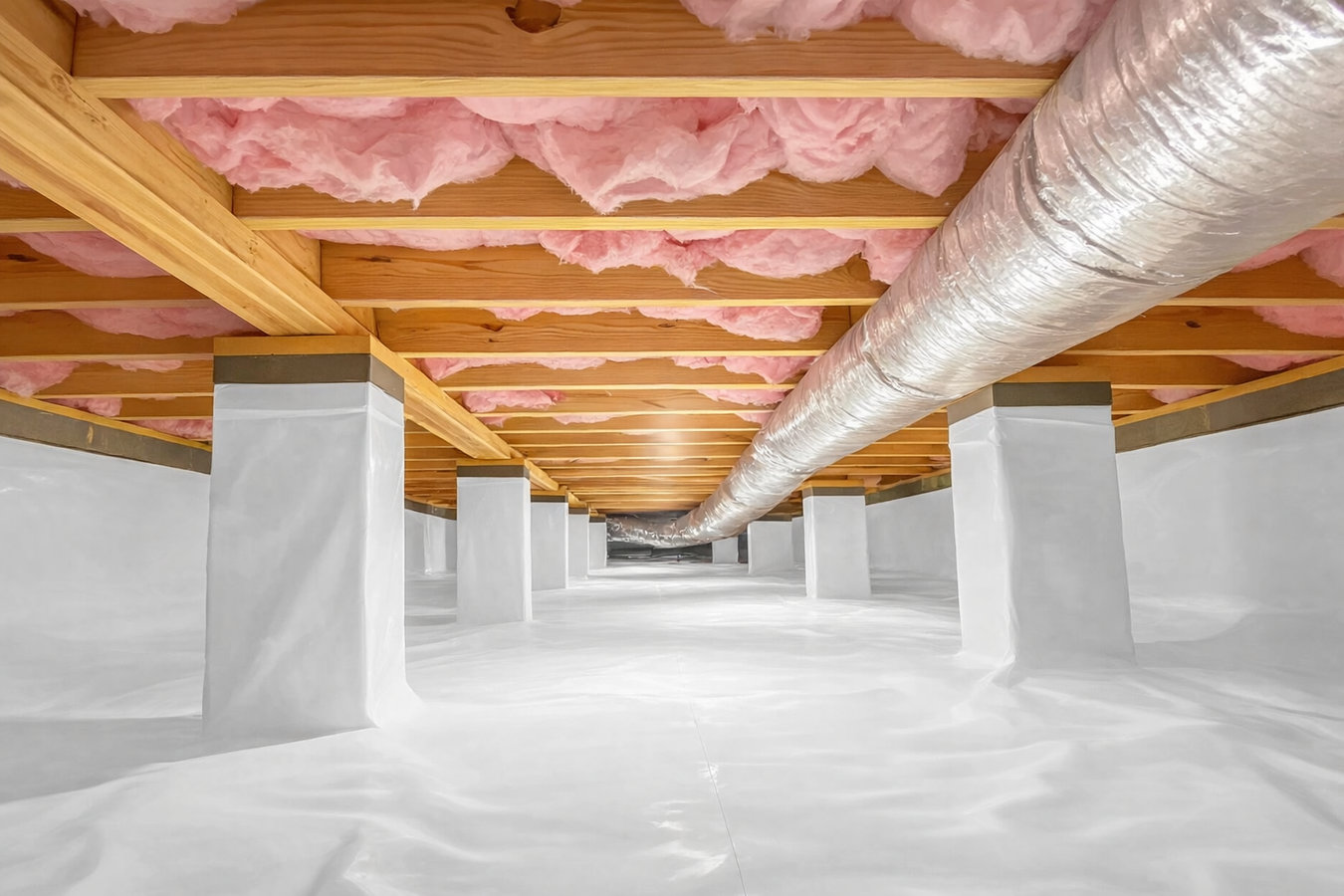
Cold floors and crawl space moisture are common in Seaside homes. We insulate and seal your crawl space properly so you stop losing heat and start feeling the difference.
Cold floors and crawl space moisture are common in Seaside homes. We insulate and seal your crawl space properly so you stop losing heat and start feeling the difference.
Crawl space insulation in Seaside installs insulating material and a vapor barrier beneath your home to slow heat loss through the floor and block ground moisture, with most single-family jobs completed in one day, delivering noticeably warmer floors and cleaner indoor air starting with the first cool season.
Most Seaside homes with raised foundations have a crawl space that connects directly to the ground below. Without proper insulation and a vapor barrier, cold air and ground moisture travel upward through that space into your living area. In a coastal climate where the ground stays damp for much of the year, that upward movement of moisture is steady and relentless. The result is cold floors in winter, musty air year-round, and heating costs that feel too high for how mild the weather actually is.
Crawl space insulation works alongside other improvements for the best result. Many Seaside homeowners pair it with a crawl space vapor barrier for full moisture control, or combine it with wall insulation to address heat loss from multiple sides of the building envelope at once.
If the floors in your kitchen, hallway, or bedrooms feel noticeably cold or slightly soft during Seaside's cool, foggy winters, that is often a sign that little is standing between your living space and the cold, moist air beneath your home. This is especially common in older Seaside homes where original insulation has deteriorated or was never installed.
A persistent musty or earthy odor that seems to come from the floors or lower walls often means moisture and mold are present in the crawl space below. In Seaside's damp climate, crawl spaces without proper moisture barriers are particularly prone to this problem. The smell will not go away on its own.
If your heating bills feel out of proportion to the gentle weather outside, heat loss through an uninsulated floor is a likely culprit. Many Seaside homeowners are surprised by how much energy escapes through the crawl space during the long, cool, damp winter months.
If you can safely peek through your crawl space access hatch and see insulation that is sagging, falling from the floor joists, or visibly wet or discolored, it is no longer doing its job. This is common in mid-20th-century Seaside homes where original batt insulation has had decades to absorb coastal moisture.
We assess your crawl space before recommending any approach. The right solution depends on whether your home has a vented or sealed configuration, the current state of any existing insulation, and the moisture conditions we find on-site. For many of Seaside's older homes, the right path is a sealed crawl space with new insulation and a proper vapor barrier installed as a system - not just batting tucked between joists without addressing the ground moisture underneath. If damaged material needs to come out first, we handle that as part of the scope. After installation, we check the finished space and explain what to watch for going forward.
For homes where the crawl space connects to a broader moisture or air sealing problem, we can also recommend wall insulation or a dedicated crawl space vapor barrier installation as complementary work. The U.S. Department of Energy recommends treating crawl space insulation and air sealing as a coordinated system rather than independent tasks, and that is exactly how we approach every job.
A traditional approach suited for homes with accessible floor joists and dry crawl spaces that do not have significant moisture concerns.
Best for Seaside homes in the fog belt - insulating the crawl space walls and laying a vapor barrier converts the space to a protected, conditioned environment.
For homeowners whose primary problem is ground moisture moving upward - installed alongside or independently from insulation.
For homes where existing insulation has deteriorated from moisture or pest damage and needs to be cleared out before new material goes in.
Seaside sits on the Monterey Peninsula where marine fog rolls in from the Pacific most mornings and ground moisture levels stay elevated for much of the year. That persistent dampness is the single biggest threat to an uninsulated or poorly insulated crawl space - it works its way up through the soil, into the crawl space air, and eventually into your floors and walls. Many of Seaside's homes were built in the 1940s through 1970s to house Fort Ord military families, and a large share of those crawl spaces have original insulation that has absorbed decades of coastal moisture. In these homes, a vapor barrier and proper moisture management are not optional considerations - they are the foundation of any crawl space insulation project that will actually hold up over time.
We work throughout the Seaside area and in neighboring communities. Homeowners in Pacific Grove and Carmel-by-the-Sea face the same coastal moisture conditions - and in those communities, as in Seaside, a crawl space that has never been properly addressed is one of the most common sources of cold floors and elevated energy costs. California's building energy code, Title 24, also sets minimum insulation requirements for permitted work in this climate zone - we handle code compliance as part of every job so you do not have to navigate the requirements yourself.
We ask about your address, the age of your home, and any problems you have noticed. We reply within one business day and can usually schedule an estimate visit within a week.
We enter the crawl space and do a thorough inspection - checking existing insulation, the vapor barrier condition, signs of moisture or mold, and the overall layout. You get a written estimate that clearly explains what was found and what is recommended.
The crew arrives with all materials and equipment. We remove any old damaged insulation if that is part of the scope, then install new insulation and vapor barrier. Most standard Seaside homes are completed in a single day.
Before we leave we walk you through the finished crawl space - in person or with photos - explain what was done, and answer any questions. Benefits begin immediately, and you should notice a difference in floor temperature within the first few weeks.
We come to you, inspect the crawl space in person, and give you a written quote - no obligation, no guesswork. Replies within one business day.
(831) 315-4007In Seaside's coastal climate a vapor barrier and moisture strategy are not optional add-ons - they are the foundation of any crawl space insulation project. We assess ground conditions, recommend the right barrier thickness, and ensure every edge is properly overlapped and secured so moisture does not work its way back in.
Much of Seaside's housing was built in the 1950s through 1970s for military families at Fort Ord, and many of those crawl spaces have never been professionally updated. We work in these homes regularly and know what to expect - deteriorated batts, absent vapor barriers, and venting configurations that no longer reflect best practice.
California's building energy code sets minimum insulation requirements for permitted work. We know what those standards mean for Seaside's climate zone and handle all documentation, so you do not have to navigate the code yourself. This matters if you ever sell your home or apply for energy rebates.
You receive a detailed written estimate after a real in-person inspection - not a figure from a website calculator. If the scope changes once we are under the house, we tell you before we proceed. The price you approve is the price you pay.
Crawl space work in a coastal climate is different from the same job in a dry inland area. The moisture conditions under Seaside homes require materials and techniques chosen for this environment - not whatever is cheapest or fastest. That is the difference between an install that holds up for 20 years and one that needs to be redone in five.
Complete your home's thermal envelope by adding wall insulation to complement a newly sealed and insulated crawl space.
Learn MoreA properly installed vapor barrier works alongside crawl space insulation to block ground moisture before it can damage your floors and framing.
Learn MoreSeaside's damp season is long - the sooner your crawl space is sealed and insulated, the sooner your floors feel warmer and your home smells better.